The Fires That Never Happened: Using the Right Data to Rethink How We Measure Value in the Fire Service
Key Takeaways
- Traditional fire reports focus on damage and dollar loss, neglecting the prevention efforts that stop fires before they escalate.
- Enhancing fire department data collection to include prevented losses and qualitative impacts can better demonstrate the true value of the fire service.
- A cultural shift is needed within fire departments to communicate the importance of prevention and early intervention to stakeholders and the public.
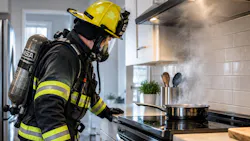
In a report, it can look like nothing even happened. No flames through the roof. No request for additional alarms. No documentation of hoselines being stretched or ground ladders being deployed.
Ultimately, no report of a fire that caused hundreds of thousands, or even millions, of dollars in property damage. Just another routine call, cleared almost as fast as it took the first-due truck to arrive, logged as “no fire” with a zero-dollar loss in the incident report. However, anyone who stood in the smoke-filled kitchen, seconds away from ignition, knows that everything almost happened.
This is quite the paradox at the heart of the modern fire service reporting: the fire service is exceptionally good at documenting destruction, but remarkably poor at capturing prevention. The systems that we rely on to tell our story, incident reports, dollar loss, call categorization, fatalities and injuries, are built to measure what burned, not what was saved. In doing so, the incident reports omit some important work that firefighters and others in the fire service do every single day.
The Invisible Wins
When times are tough, municipalities often look to fire department staffing as a place to cut from the budget. The logic seems straightforward: if the number of “actual fires” has declined, then perhaps the demand for services is not as high as it once was. Spreadsheets reinforce this argument. Charts show a downward trend in fires and dollar loss. As a result, the bottom line gets affected.
However, numbers, as clean and convincing as they appear, rarely tell the whole story.
Rather than looking only at major fires, firefighters will tell you that their greatest impacts happen on calls that never make the headlines—the “pot on the stove” incident. The overheated electrical outlet caught just in time. The homeowner caught the smouldering couch because working smoke alarms alerted them before it became a raging inferno. These are all moments where public education, fire prevention, and rapid intervention make the difference between inconvenience and catastrophe.
One firefighter described it this way: call after call, entering apartments filled with smoke, the air is thick and conditions primed for ignition. A pan left unattended with hot oil is just beginning to break down. Overhead cupboards and other combustibles are ready to catch fire. A few more minutes—maybe even seconds—and it becomes a working fire.
Instead, fire crews arrive swiftly and intervene. They remove the hazard, ventilate and ensure no extension. The resident returns to a home that still stands.
How is the incident reported? No fire, zero-dollar loss. Multiply that across a shift, a station, a city—and the scale of what is being missed becomes staggering.
Fire crews have long noted the frequency of these incidents. Some high-volume fire stations may encounter such an incident once per shift, if not more. That is hundreds per year from a single station alone—hundreds of near-misses that never enter the narrative of “fire loss."
The stats do not show it, but the impact is undeniable.
A system built for loss, not prevention
The data gap is not accidental. Fire reporting systems were historically designed to capture and analyze fire occurrence, cause, and damage. Their primary purpose was to understand how fires start, how they spread, and how much damage they cause in dollars. These are critical data points that have driven decades of improvements in building codes, fire protection systems, public education initiatives, and suppression tactics.
But they are inherently reactive.
Fire reporting systems measure the aftermath, not the intervention. The document points to the shortcomings, not success stories. As a result, they create a skewed picture of reality—one where the absence of fires appears to be an absence of need.
A “pot on the stove” call stopped just before ignition; in reality, it is a prevented fire. It has prevented displacement. It has avoided economic and human impact. Yet in the data, it is indistinguishable from a false fire alarm or minor service call.
This is often the gap that gets missed in the fire service. The data we rely on does not capture the value of what did not happen.
And that becomes dangerous when those same data sets are used to make decisions about staffing, resource allocation, and long-term planning.
The staffing equation
Proper staffing is one of the most debated and scrutinized elements of fire service budgets. It is one of the most misunderstood elements outside of the profession.
To the untrained eye, a fully staffed fire truck responding to a “minor” incident can seem excessive. Why send four firefighters to a “pot on the stove”? Why maintain minimum staffing levels when call types appear to be low-risk?
The answer lies in time and capability.
Fires grow exponentially and fire can rapidly escalate to flashover conditions within minutes. Early, decisive actions are the only reliable way to interrupt that progression. Early actions require the rapid arrival of firefighters—trained, equipped, and ready to perform multiple tasks simultaneously.
On a pre-fire conditions call, a properly staffed fire crew can investigate, control the hazard, check for extension, ventilate the space, and ensure occupant safety and well-being. All those tasks are successfully accomplished in a narrow timeframe. Reduce staffing, and the margin for error increases. Delays increase and risk compounds.
In other words, the very reason these incidents remain ‘non-events’ is the resources devoted to them.
If staffing decisions are driven only by reported fire loss or incident counts, it creates a false narrative that demand is low or impact is minimal. In reality, properly staffed fire trucks are the reason those numbers stay low in the first place.
Cut the staffing, and the statistics will eventually change, but not in a way any community would welcome.
Prevention beyond the fireground
The same principle applies to fire prevention and public education initiatives – another area where value is often underrepresented in traditional metrics.
Smoke alarm campaigns, school education programs, inspections, and community engagement all contribute to reducing fire risk. These programs change behaviour. The programs increase awareness. The programs create layers of protection that stop incidents before they begin.
Yet their success is measured in absence.
How many fires did not occur because a family installed a working smoke alarm? How many injuries were avoided because a child learned not to play with lighters? How many high-risk conditions were corrected during a routine inspection?
These outcomes are difficult to quantify and are often undervalued in budget decisions. Fire prevention and education programs can be seen as discretionary – nice to have, but not essential.
That perception ignores a fundamental truth: prevention and suppression are not separate functions. They are interconnected parts of a single system designed to manage risk – the fire service eco-system.
Every prevented fire reduces demand on suppression resources. Every educated resident becomes a partner in community safety. Every inspection that corrects a hazard eliminates a future emergency. Every hazard eliminated has an impact on the community and the economy that is avoided.
If we do not measure and communicate these impacts effectively, they remain invisible in the very forums where decisions are made.
Dollars lost vs. dollars saved
In municipal governance, financial language matters. Budgets are built on numbers. Investments are justified through cost-benefit analysis. And in that context, the fire service often finds itself at a disadvantage. We can report, with precision, the dollars lost in a fire. We can estimate property damage, loss of contents, and economic impact. These figures are tangible and immediate.
What we struggle to present are the dollars saved.
What is the value of stopping a kitchen fire before it spreads? What is the economic impact of keeping a family in their home rather than displacing them? What is the cost avoidance associated with preventing a multi-unit residential fire in a dense urban environment?
These are not abstract questions. They are central to understanding the true return on investment in the fire service.
Consider the analogy of insurance. If you look at statistics, you might conclude that buying insurance does not make sense. The probability of a catastrophic event may be low. Over time, the premiums may exceed the cost of a single incident. Nonetheless, nearly everyone carries insurance.
Why? Because the purpose is not to maximize short-term financial efficiency. It is to manage risk and protect against unacceptable loss.
Fire protection operates on the same principle. It is not just about responding to incidents; it is about preventing catastrophic outcomes.
If we begin to quantify dollars saved – through rapid intervention, with effective staffing, and proactive prevention – we shift the conversation. We move from a cost-center narrative to one of value creation and risk mitigation.
Bridging the gap
Addressing this reporting gap does not require abandoning existing systems. It requires enhancing them. First, there is a need to incorporate “prevented loss” metrics into incident reporting. This could include estimated damage avoided based on conditions found, potential fire spread, and occupancy type. While such estimates will never be perfect, they provide a more complete picture than zero-dollar loss reports.
Secondly, qualitative data should be evaluated alongside quantitative metrics. Narrative reports, case studies, and operational debriefs can illustrate the real-world impacts of interventions in a way that numbers alone cannot.
Third, technology offers new opportunities. Data analytics, predictive modelling, and integrated reporting platforms can help capture and communicate the broader impact of fire service activities, from prevention to suppression.
Finally, there must be a cultural shift within the profession itself. Fire services need to become more intentional in telling their story, not just internally, but to councils, stakeholders, and the public. The value of what we do cannot be assumed to be understood; it must be demonstrated.
A different way of seeing
Imagine a dashboard presented to the municipal council. Instead of showing only the number of fires and the total dollar loss, it includes:
- Estimated dollars saved through early intervention.
- Number of prevented fire incidents.
- Reduction in risk due to prevention initiatives.
- Community engagement and education outcomes.
- Staffing levels correlated with incident outcomes.
Suddenly, the narrative changes.
The fire service is no longer seen as responding only to rare, high-impact events. It is recognized as a system that actively manages risk, preserves property, and protects lives and livelihoods every day—often in ways that never make it into traditional statistics.
Burnt food for thought
At its core, this issue is about perspective.
If you look at statistics to make your decisions, you would never buy insurance. It does not make sense when looking at the numbers. However, nearly everyone has insurance because we understand the value of protection against potential risks.
The fire service operates in the same space – between what is and what might be.
The “pot on the stove” call may never dominate annual reports. They may never justify headlines or dramatic budget increases. However, they are the quiet evidence of a system working exactly as intended.
They are the fire that never happened.
Until we find a way to measure and communicate their value, we will continue to risk undervaluing the very thing that keeps our communities safe.
About the Author
 Luigi Davoli
 Luigi Davoli
Luigi Davoli is a veteran fire service leader who has served his community for over 26 years, advancing from firefighter to platoon chief. Known for his commitment to ethical leadership and his belief in treating people with fairness and humanity, he has become a trusted voice on professional standards, training excellence, and modern fire service culture. His writing reflects a career spent learning, listening, and striving to build organizations that honour both tradition and progress.